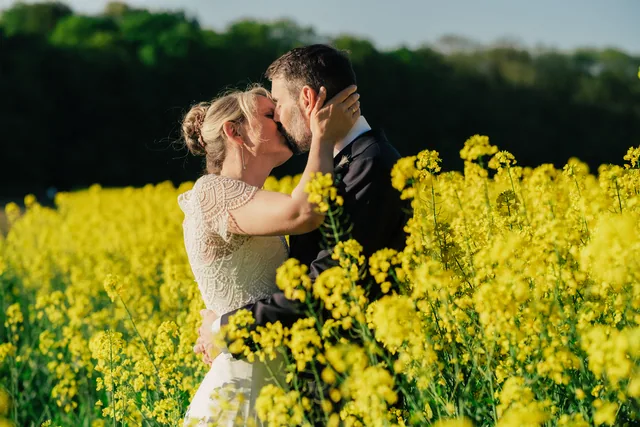
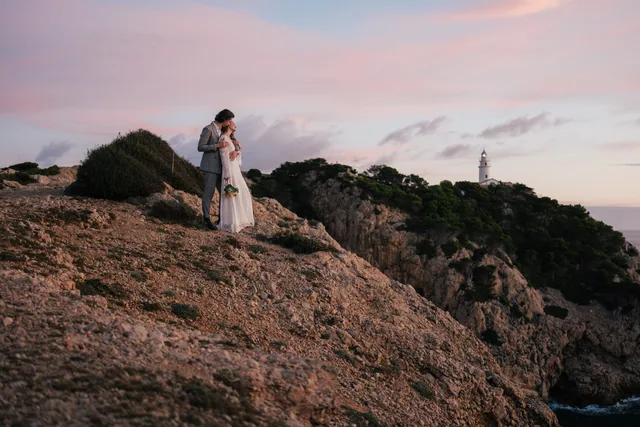
Both are small. Both skip the 120-person production. So what actually separates a micro wedding from an elopement, and which one is yours?
The honest answer: one of them is still an event, and the other isn’t. That single difference drives everything else, from cost and planning effort to how the day feels from inside. This guide lays out the real distinctions without pretending one is the upgrade, and ends with the question that usually decides it.
The definitions, without fog
An elopement is built around the two of you. Zero guests, or a small handful who witness rather than attend. No seating plan, no run sheet, no hosting duties. The day bends entirely around light, landscape and what you feel like doing.
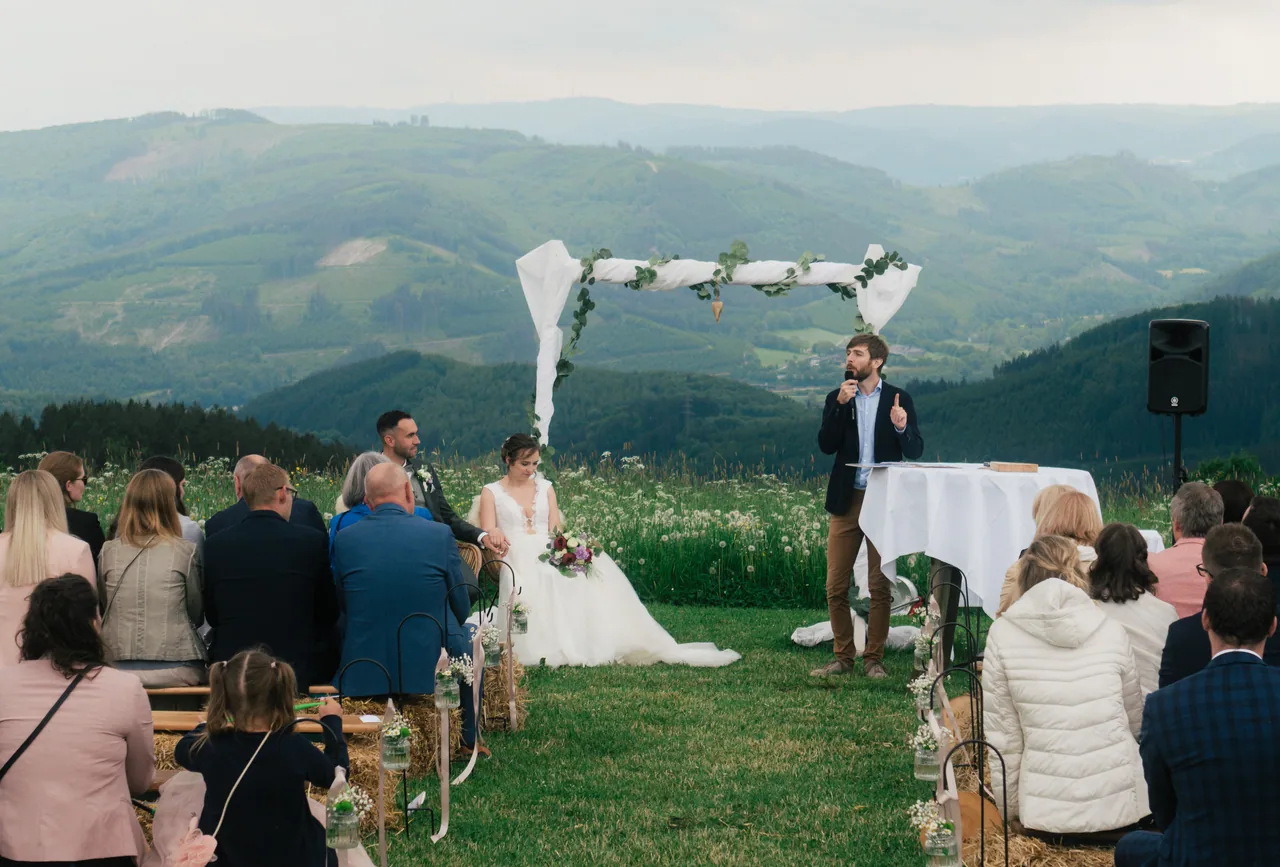
A micro wedding is a real wedding in miniature, with roughly ten to thirty guests. There’s a ceremony with chairs, a dinner with places, often toasts and a little dancing. Everything a wedding has, except the crowd.
You’ll also meet the word “minimony”, a tiny ceremony-only gathering, often paired with a bigger party later. Useful term, same logic: the more hosting, the further from an elopement you are.
The differences that actually matter
| Elopement | Micro wedding | |
|---|---|---|
| Guests | 0 to a handful | ~10–30 |
| You spend the day | With each other | Hosting, gently |
| Venue | Any landscape you can reach | Somewhere that seats a group |
| Schedule | Follows the light | Follows the dinner |
| Planning load | Light | A real event, scaled down |
| Typical Europe cost | Follows your vision, lean to lavish | Often €10,000–€25,000+, scales with hosting |
| Grandparents | Usually not present | Can be front row |
That last row is not a joke. In every planning forum thread on this choice, the deciding factor is almost never décor or money. It’s whether certain people need to see it happen.
What a micro wedding gives you
Witnesses, mainly, and that’s not small. Vows spoken in front of your parents land differently than vows reported to them afterwards. A micro wedding keeps that, along with dinner-table laughter and the photos where four generations stand in one frame.
It also keeps some event machinery. Somebody must plan a group meal, seat people, schedule the day around the slowest member of the party. It’s a fraction of a full wedding’s load, but it’s hosting, and on the day a part of your attention will belong to the room.
What an elopement gives you
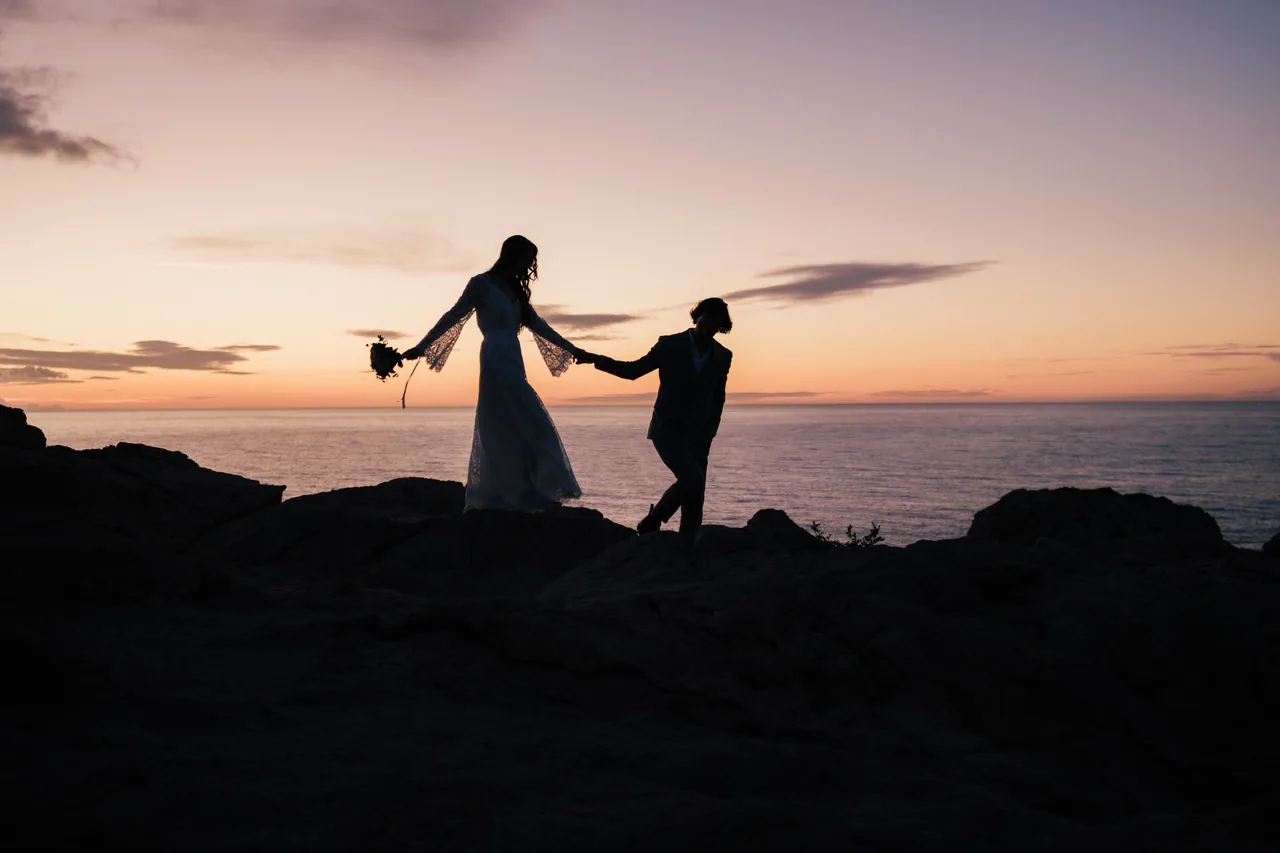
The freedom is concrete. A ceremony at sunrise on a ridge no group could reach. The option to move everything a day when the forecast turns. A schedule with nothing in it but the two of you and the light.
The trade is equally concrete: nobody watches you marry. For some couples that thought is pure relief, and for others it’s a quiet loss. Both reactions are information. The full comparison against a traditional wedding, including costs and the family question, is in elopement vs wedding.
The middle of the middle
Plenty of couples land between the two labels, and that’s fine. A ceremony alone on the cliffs at golden hour, then dinner in town with six people that evening. An elopement with your two best friends as witnesses. A finca weekend where ten people share a house but the vows happen on a hilltop with no chairs at all.
The labels are for blog posts like this one. Real days can be built to order. In Europe, the landscape does half the design work anyway, as the planning guide shows.
How to decide
Run the ceremony test. Close your eyes and picture the exact minute of your vows. Now add twenty seated people to the picture.
Did the image get warmer, or did your shoulders tense? That reflex is more honest than any pro-and-con list. If it warmed, plan a micro wedding and enjoy every chair. If it tensed, elope, and give your people a wonderful dinner party when you’re home.
Still unsure what the small option even involves? Start with what an elopement wedding actually is, and what the numbers look like.
Small is the decision
Whichever side of the line you land on, you’ve already made the brave choice: a day scaled to the people it’s about. I photograph both, from two people on a ridge to small weddings with the grandparents in the front row.
Tell me what you’re picturing and we’ll work out together which one fits.
Frequently asked questions
01 What does a micro wedding mean?
A micro wedding is a complete wedding, ceremony, dinner, sometimes dancing, scaled down to roughly ten to thirty guests. It keeps the structure of a wedding while shrinking the audience.
02 How many guests make it an elopement vs a micro wedding?
There's no official line, but a useful one: up to a handful of people who simply witness, it's an elopement. Once you're hosting a planned group with dinner and a schedule, usually ten or more, it's a micro wedding.
03 Is a micro wedding cheaper than a full wedding?
Usually, since you're feeding twenty people instead of a hundred. Industry figures put most micro weddings between roughly €10,000 and €25,000, depending on venue, country and how much you host. Guests conventionally cover their own travel and stay.
04 Should I elope or have a small wedding?
Picture your ceremony. If the people watching make it better, choose the micro wedding. If you'd be freer and more yourself without an audience, elope, and celebrate with everyone afterwards.
05 Can a micro wedding happen outdoors like an elopement?
Yes, with limits. A small group can still gather at a viewpoint, a finca garden or a mountain meadow, as long as access works for your least mobile guest. That's the planning difference: you choose places for the group, not just for two.