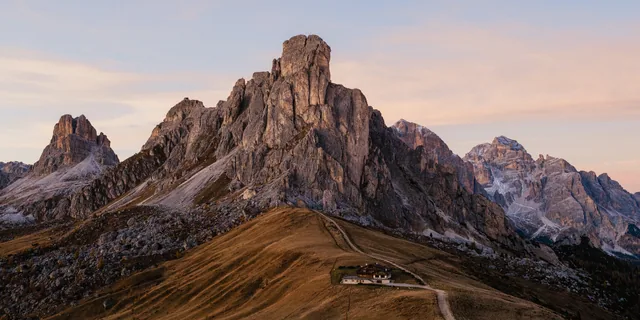
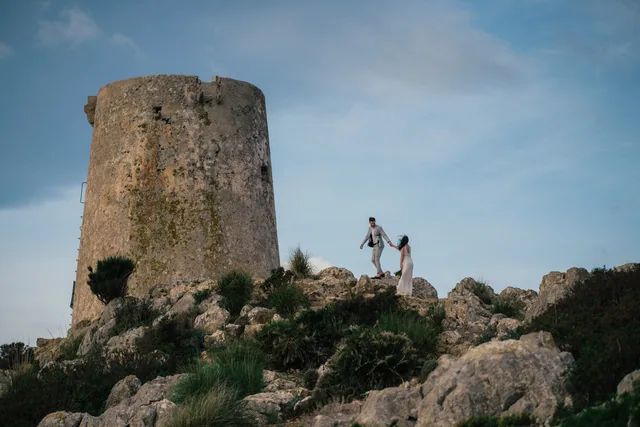
The Alps you’ve pictured, with one correction: fewer people standing in front of them.
Austria is my pick for mountain elopements. I’ve photographed couples at its lakes, waterfalls and high meadows, and I keep coming back for more. This guide covers what the Austrian Alps offer, when the mountains are open, and how access really works. It also explains why a sunrise ceremony here doesn’t require suffering for it.
The tip that’s not on the lists
Every elopement roundup names the same alpine places, and they’re famous for good reasons. Austria simply isn’t shouted about in the same way, and that’s exactly its gift: jagged limestone, green valleys and mirror lakes, with your ceremony spot far more likely to be empty.
The quiet advantages are practical too. Approaches are short, cable cars run in every valley, mountain huts serve dinner at altitude, and prices stay kind. More location options within an hour of wherever you sleep, easier weather pivots, no compromise on drama.
What the landscape gives you
Mountain lakes. Still water doubling the peaks at dawn, wooden jetties, larch forests at the shore. Lakes are the most forgiving alpine locations: flat approaches, huge payoff, beautiful in any weather.
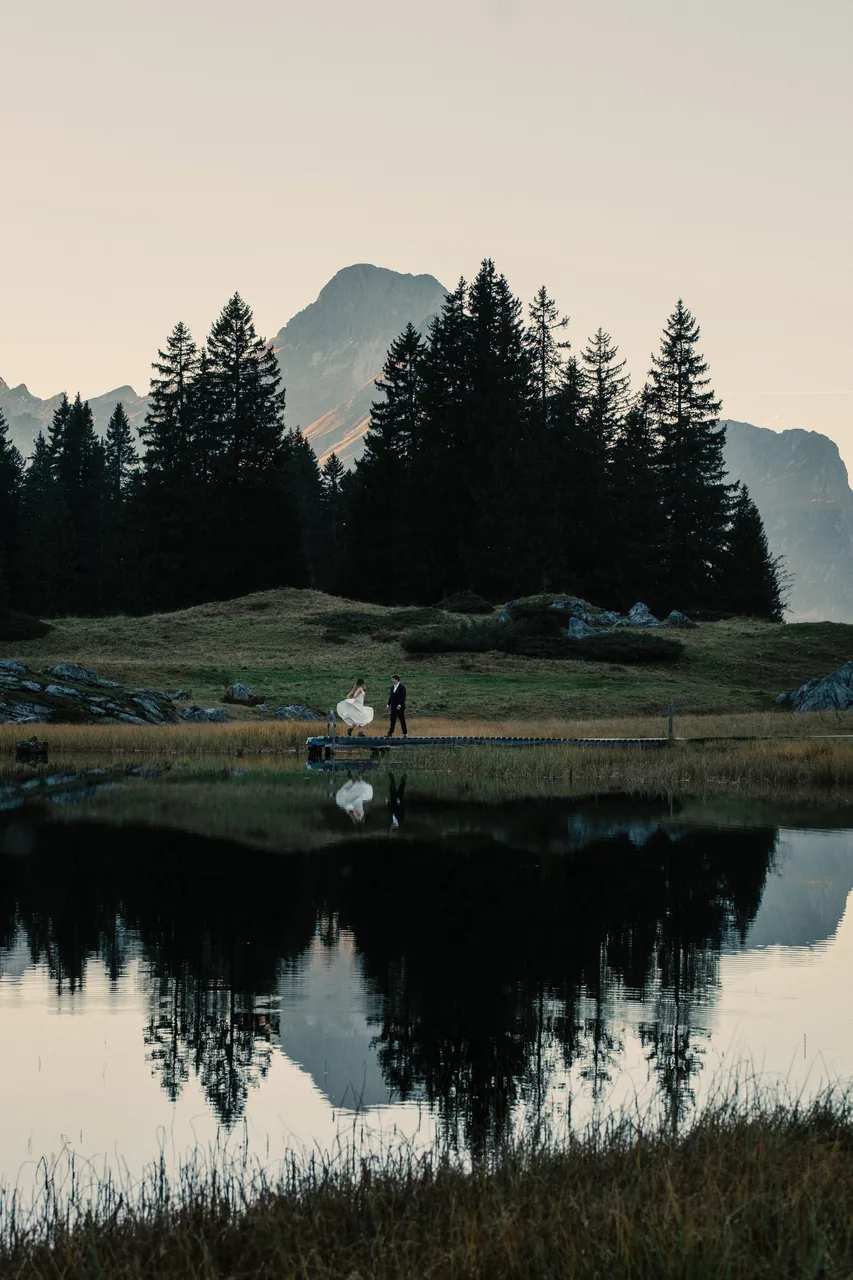
Waterfalls. Gorges and falls with mist that catches the morning light like smoke. They bring sound and movement into a ceremony, and they work even at midday when open ridges are harsh.
High meadows and ridges. Golden grass in the evening, peaks layered to the horizon, cows with actual bells. This is where the wide, small-couple-big-world images come from.
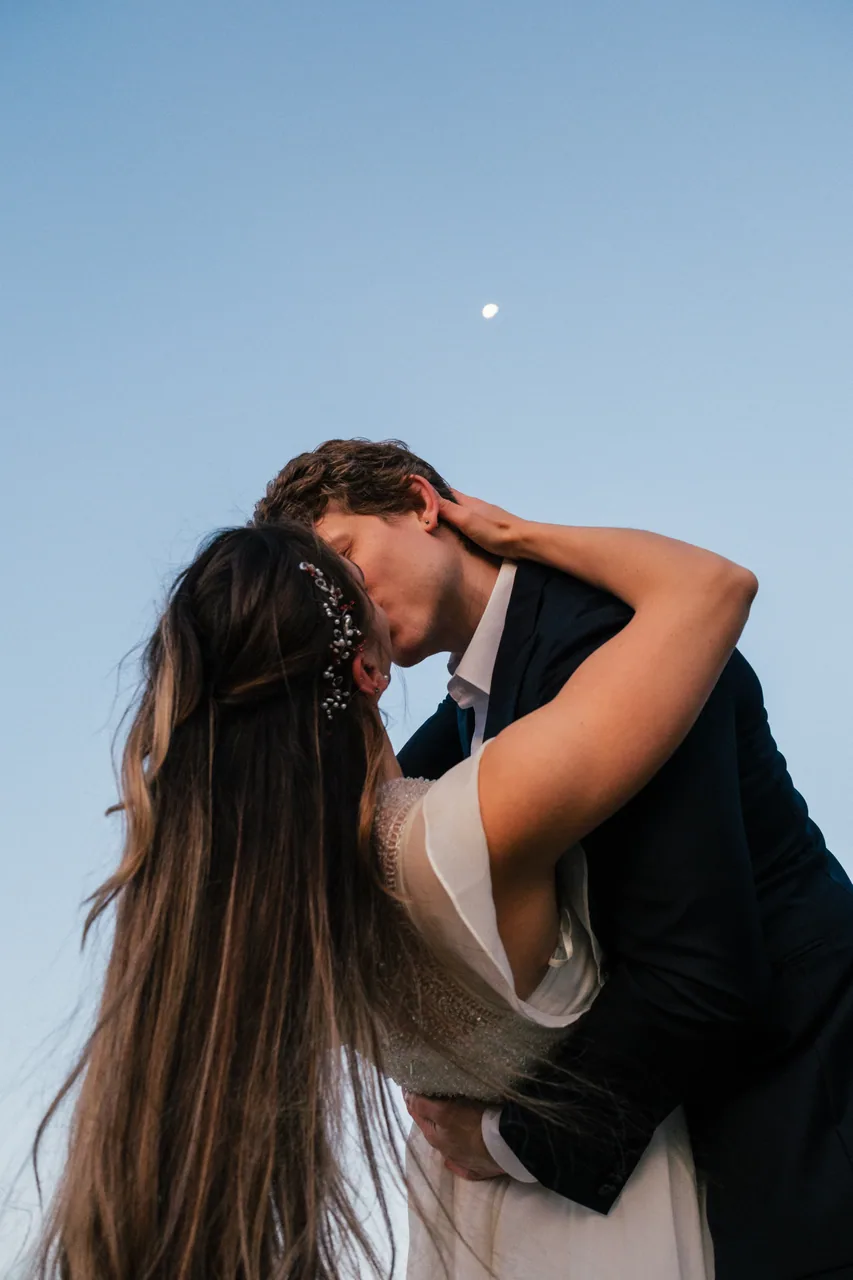
Where in Austria
A few names worth knowing. Tyrol, in the west, brings the jagged limestone and the deep valleys. The Salzkammergut, east of Salzburg, is Austria’s lake district: still water, wooded shores, villages that look painted.
Around the Grossglockner, Austria’s highest peak, the Hohe Tauern range adds glaciers to the horizon. The Dachstein region splits the difference, peaks above and lakes below.
Famous lakes like the Gosausee and the Wolfgangsee earn their reputation. Quieter ones often sit one valley over. Arriving is simple too: Innsbruck, Salzburg and Munich all work as airports, and each puts you in the mountains within an hour or two.
When the mountains are open
This is the one non-negotiable of alpine planning: altitude has a calendar.
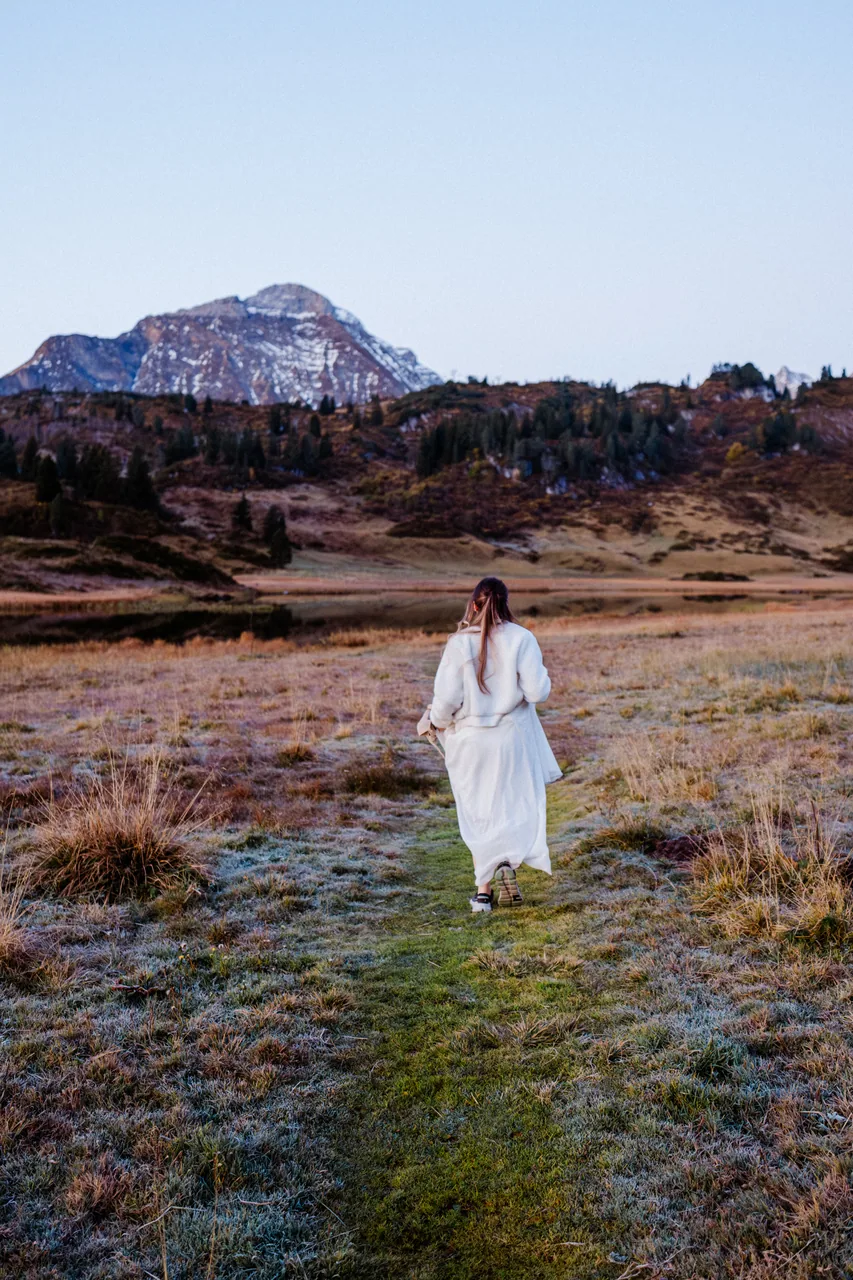
Mid-June to late September is the high season in the literal sense, when trails, passes and most lifts are open and the meadows are green. Late September into October is my favourite window: golden larches, crisp air, empty paths, though the first snow can visit the summits any time. Winter turns everything monochrome and silent, with access narrowed to lift-served areas and valleys, and privacy at its absolute peak. Spring is the in-between: green valleys below, snow still owning the heights into June.
Access, honestly
What makes Austria special for non-mountaineers is simple: the infrastructure does the climbing.
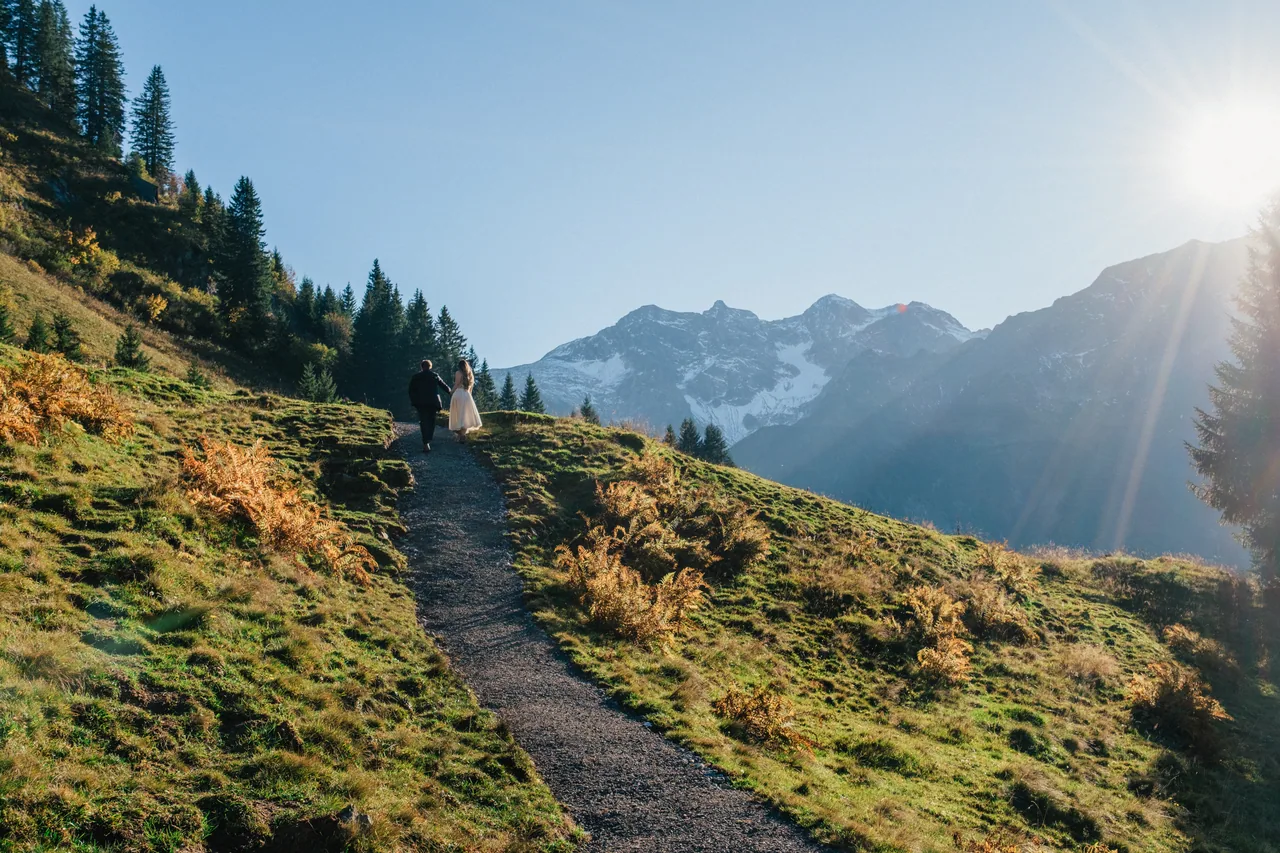
Cable cars and gondolas reach ridgelines that would otherwise cost four hours of switchbacks. Toll roads wind up to high plateaus. Mountain huts mean coffee and shelter exist at 2,000 metres. A genuine summit experience is available to a couple in wedding clothes carrying nothing but vow books.
And if you want to earn it on foot, every level exists, from stroller-flat lake loops to proper ridge hikes. Be honest about your appetite when we plan; the right spot is one you arrive at happy. Boots for the approach, dress shoes in the pack.
Weather, light and the plan B
Mountain light is the best light there is, and the least obedient. Valleys lose the sun early; ridges keep it late; mornings are statistically clearer than afternoons, which makes sunrise more than a romantic idea here.
Weather changes fast, so we never bet a ceremony on one spot or one hour. There’s always a sheltered alternative, often a waterfall or forest, and flexibility built into the timeline. Some of the best mountain photographs I’ve made happened in exactly the weather couples feared, mist moving through the trees included.
The practical frame
Legally, Austria is workable for foreigners with document preparation, and the calm alternative applies as everywhere: paperwork at home, ceremony in the mountains. The trade-offs are laid out in legal vs symbolic ceremonies.
On budget, Austria sits in my Central Europe package at €3,600, travel included, the friendliest tier. The wider numbers are in the cost guide. Practicalities are simple. Rent a car, stay in the valley below your main location, and plan three or more nights. Check that your dream lift runs on your date.
An Alps day that works
Drawn from real days here: sunrise at a mirror lake while the world sleeps. Breakfast at a hut, a nap, a slow afternoon. A gondola up in the late afternoon, then a ceremony in a high meadow as the light turns gold. Alpenglow handles the portraits. Dinner back in the valley, earned twice over.
Rain version: waterfall morning, forest vows under a canopy, the mist doing half my job. Both days end with the same two people married in the same mountains.
The mountains people hope for
The Austrian Alps are what people hope the Alps will be: vast, green-then-gold, reachable, and still quiet in the right corners. They reward exactly the kind of day an elopement is, and you’ll find them all through my portfolio. The wider context, including how Austria compares to other regions, is in the Europe planning guide.
If a sunrise lake or a golden ridge has been living in your head, tell me what you’re picturing. I know these mountains, and I know the quiet corners.
Frequently asked questions
01 Why don't more people think of Austria for an elopement?
Because the famous alpine names get all the attention, and Austria quietly delivers the same drama with easier logistics: cable cars in every valley, short approaches, kind prices and far fewer people in your ceremony spot. It's the insider pick rather than the obvious one.
02 Do we have to hike for an Austrian Alps elopement?
No. Cable cars, mountain roads and short trails put serious scenery within reach of almost anyone. If you want a proper hike it's there, but a ten-minute walk can already deliver a ridge, a lake or a waterfall.
03 What is the best time for an Alps elopement?
Mid-June to late September for high routes, when trails and lifts are open. Late September to October brings golden larches and empty paths at lower altitude. Winter is spectacular and quiet, with access limited to lift-served areas.
04 Can foreigners legally marry in Austria?
Yes, with preparation: documents, often apostilles and translations, and a civil ceremony through the registry office. Many couples still choose to handle paperwork at home and hold a symbolic ceremony in the mountains, which keeps the day completely flexible.
05 Austrian Alps or Swiss Alps for an elopement?
Both are spectacular; the difference is practical. Austria delivers comparable scenery with shorter approaches, denser lift infrastructure and friendlier prices, while Switzerland brings the bigger glacier names at a premium. For a two-person ceremony, quiet matters more than fame, and Austria has more quiet to give.
06 What if the weather turns on the day?
Mountain weather moves fast in both directions, which is why we always plan a backup spot and flexible timing. Mist and dramatic clouds often photograph better than a plain blue sky, especially on film.