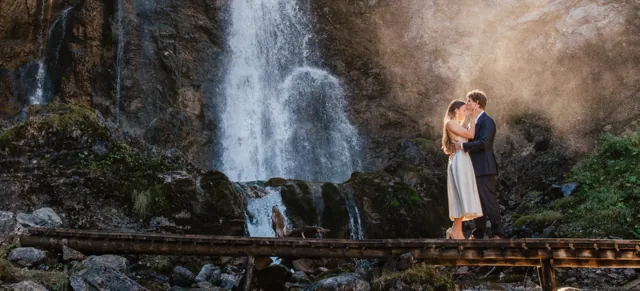
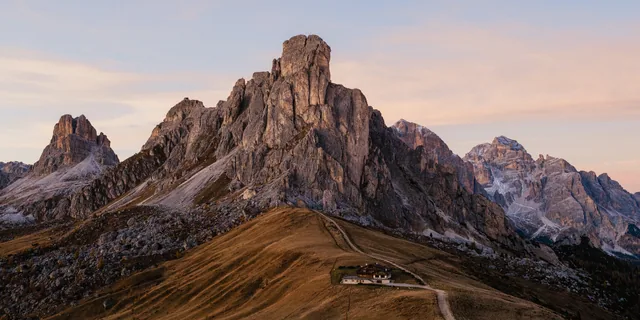
The first time you stand on a Tramuntana ridge with the sea on both sides of the evening, Mallorca stops being “that holiday island” for good.
This is my signature region, where I’ve photographed real elopements from ridge ceremonies to finca dinners. Through my family, it’s also my second home. So this guide is local knowledge rather than research: where the island shines, when to come, what the wind does, and how to have a sea cliff to yourselves on an island millions visit.
Why Mallorca works so well
Variety per kilometre. The island fits mountains, coast, villages and countryside into a space you can cross in ninety minutes.
One elopement day can hold a sunrise ridge ceremony, an old-town wander and a clifftop picnic at sunset. No single drive is long. Add an airport with cheap direct flights from most of Europe and a season that runs essentially year-round, and the practical case makes itself.
The island’s four faces
The Tramuntana mountains. A UNESCO-listed range running the island’s whole northwest, with ridge paths, olive terraces and views where sea and summits share the frame. The GR221 long-distance route threads the whole range, and the Ma-10 road serves most trailheads, which keeps approaches short. This is where the drama lives.
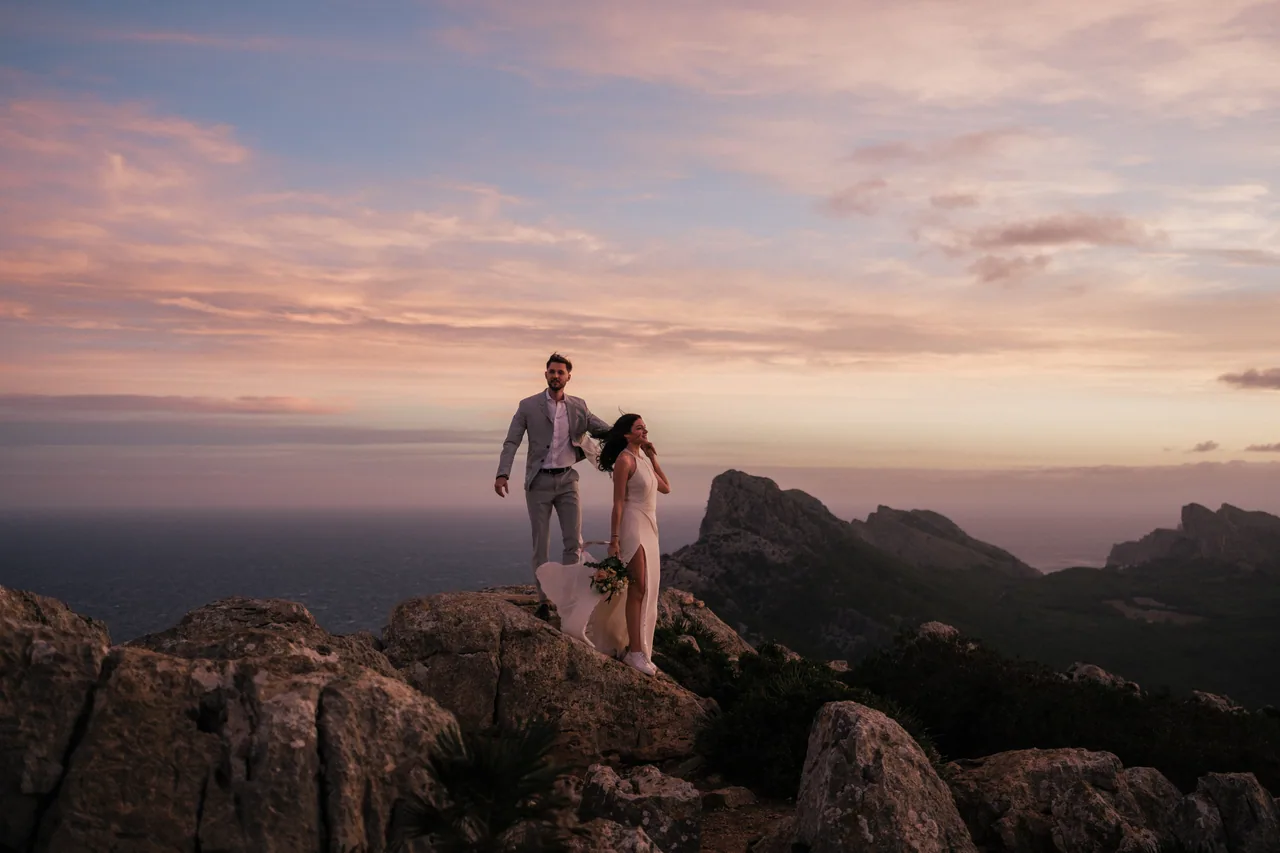
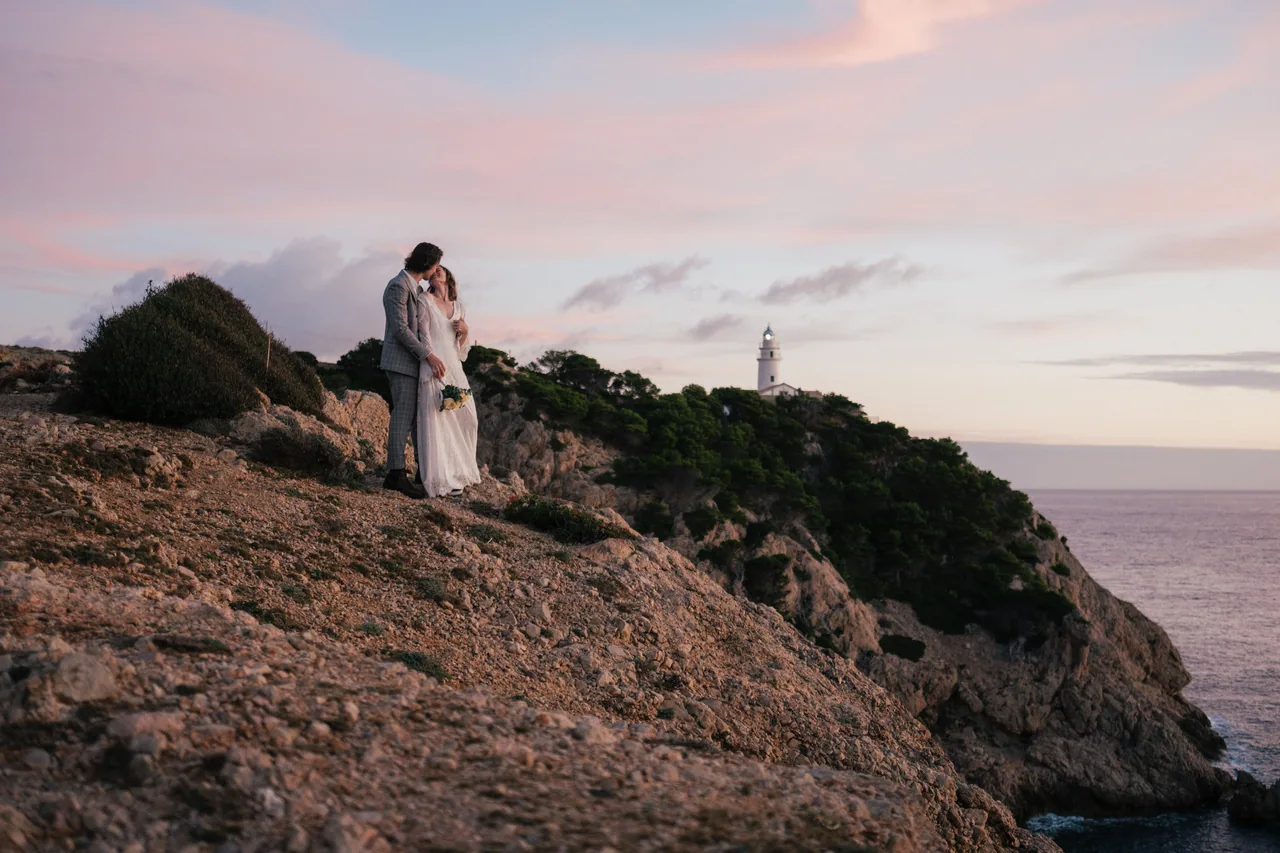
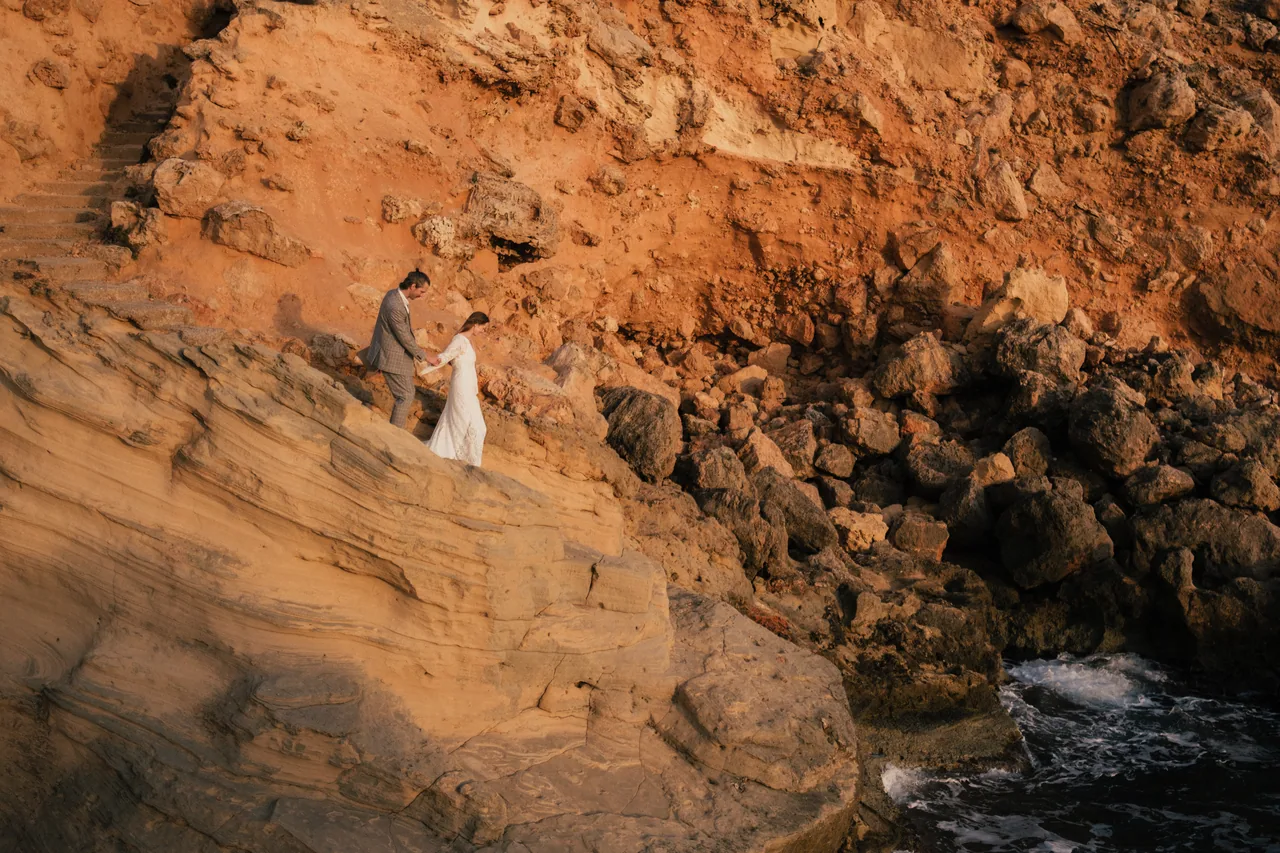
The coast. Golden limestone cliffs, hidden coves, and capes like Formentor where lighthouses and old watchtowers stand over the sea. The west coast gets the sunset; the quieter east coast gets the sunrise. Some of my favourite ceremony spots are a ten-minute walk from a road and feel like the end of the world.
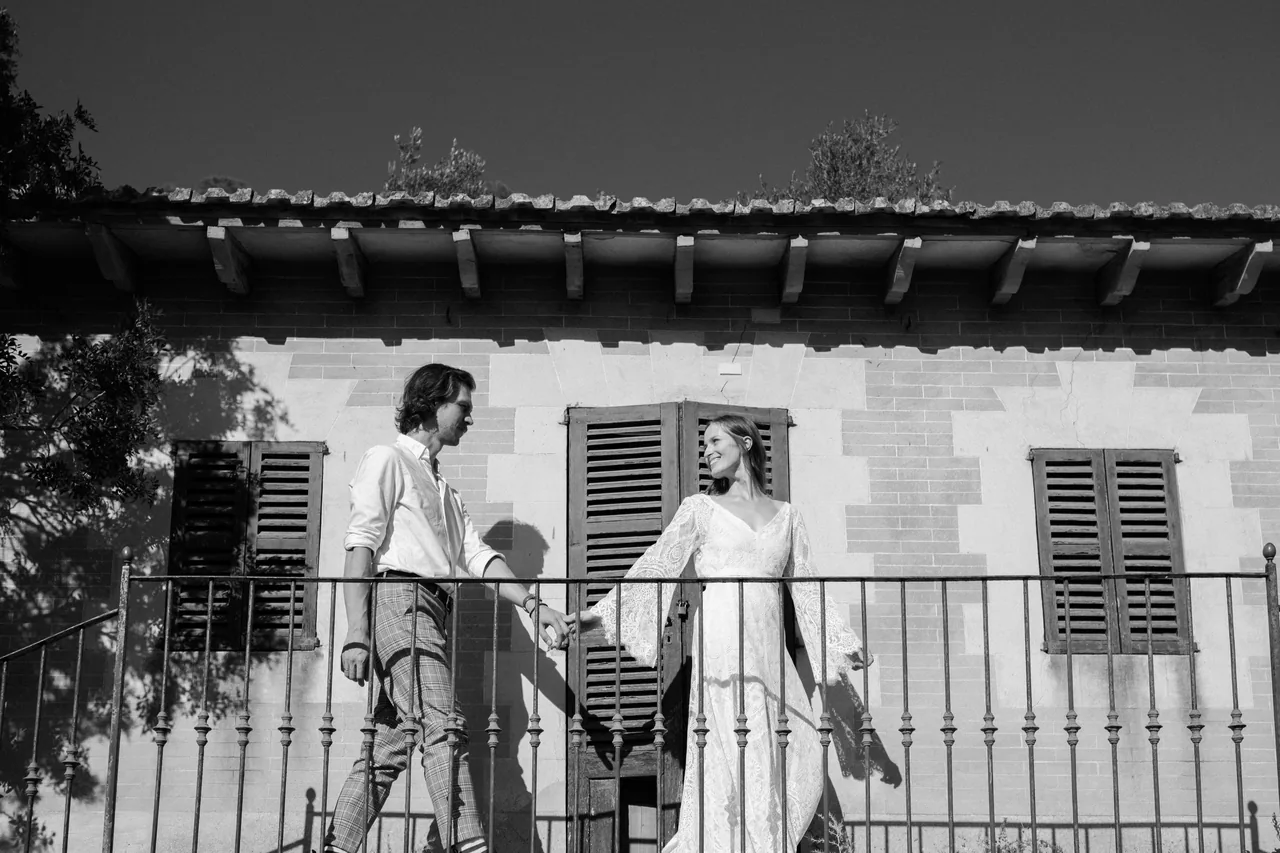
The old towns and villages. Honey-coloured stone, narrow lanes, shutters and bougainvillea, with mountain villages like Valldemossa, Deià and Fornalutx as the famous faces of it. Perfect for a slow wander with a camera between the big landscape chapters of the day.
The fincas. Old country estates with olive groves, pools and courtyards. As a place to get ready, host a tiny dinner, or anchor a whole elopement weekend, a finca is the island’s quiet superpower.
When to come
April to June is the island at its best: wildflowers, green terraces, warm but workable light, sea brightening by the week. September and October run it close, with a sea still warm enough to swim and a softer, golden quality to everything.
July and August are hot, busy and still beautiful. Build the day around sunrise and the final two hours of light, with a long siesta in between. And that rhythm makes the best timeline anyway. Winter is the secret season: empty viewpoints, dramatic skies, almond blossom from late January, and the trade-off of shorter days and occasional storms.
Light, wind and other local truths
Light first. The west coast takes the sunset; for sunrise you’ll want the east, or a high ridge that catches first light over everything. Midday sun here is harsh most of the year, which is one more argument for the slow-middle timeline.
Then wind. It’s the island’s real weather variable, shaping exposed capes and ridge lines more than rain ever does. It’s rarely a problem, often a gift to photographs, and occasionally a reason to have a sheltered alternative spot, which we always do.
And privacy comes down to timing. Sunrise belongs to you nearly everywhere. Weekdays beat weekends, shoulder season beats August, and a fifteen-minute walk filters out almost everyone.
One access note: in high summer the Formentor road closes to private cars for much of the day. A shuttle bus runs from Port de Pollença instead. The lighthouse and the Mirador Es Colomer are worth it anyway; we plan around the schedule, or aim for sunrise before closures start.
The practical frame
Legally, Mallorca is the textbook case for the symbolic route: Spain generally requires residency for civil marriage, so couples handle paperwork at home and hold the real ceremony here. The full reasoning is in legal vs symbolic ceremonies.
Budget-wise the island sits in my Southern Europe package at €3,900, travel included. Flights here are cheap from most of Europe. The complete numbers live in the cost guide. Logistics are easy. Rent a small car, stay near your main location, and give the trip at least three nights so the weather owes you nothing.
A Mallorca day that works
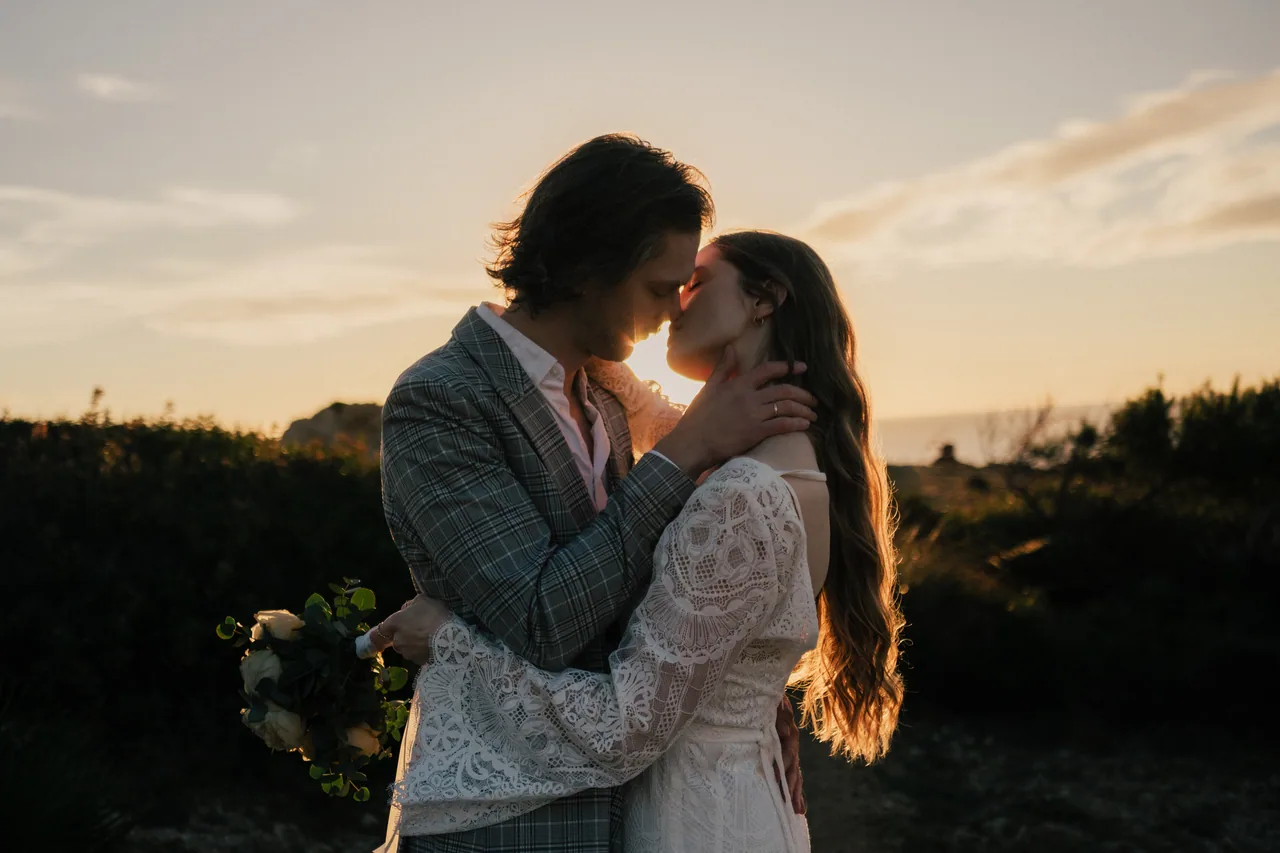
A shape I love here, drawn from real days: slow finca morning and getting ready. A first look under the olive trees. Golden-hour drive up into the Tramuntana for a ridge ceremony. Cava and a picnic as the sun drops into the sea, then portraits in the blue hour and a late dinner in a village.
Swap any chapter for a cove swim, an old-town wander or a sunrise start. The island says yes to most ideas.
An island worth marrying on
Mallorca rewards couples who look past the beach-resort cliché: it’s one of Europe’s most varied, most photogenic places to elope, and one of the easiest to actually reach. For where it fits among the alternatives, the Europe planning guide has the wider map.
And if the ridge-with-sea-on-both-sides image stuck with you, tell me what you’re picturing. This is the island I know best, and I’d love to show you it.
Frequently asked questions
01 Is Mallorca good for an elopement?
Exceptionally. Within an hour's drive you get mountain ridges, sea cliffs, coves, stone villages and quiet fincas, and the island works nearly year-round. Few places in Europe pack this much variety into one short trip.
02 Can foreigners legally marry on Mallorca?
For two non-residents, a civil marriage in Spain is generally not practical because residency is usually required. Nearly everyone handles the paperwork at home and holds a symbolic ceremony on the island, which changes nothing about the day itself.
03 What is the best time of year to elope on Mallorca?
April to June and September to October are the sweet spots: warm, greener, softer light, fewer people. July and August work too, but expect heat and crowds, and plan your ceremony for sunrise or the last hours of light.
04 How do you find privacy on Mallorca?
Timing more than secrecy. Sunrise belongs to you almost anywhere, weekdays beat weekends, and a short walk past any car park loses most visitors. Choosing the right spot for your month matters most, which is exactly the local knowledge I bring.
05 Is a Mallorca elopement windy?
It can be, especially on exposed ridges and capes. Wind shapes the plan more than rain here: hair, dresses, vow books all feel it. We simply pick spots with options, or treat moving air as part of the photographs, where honestly it does great work.